
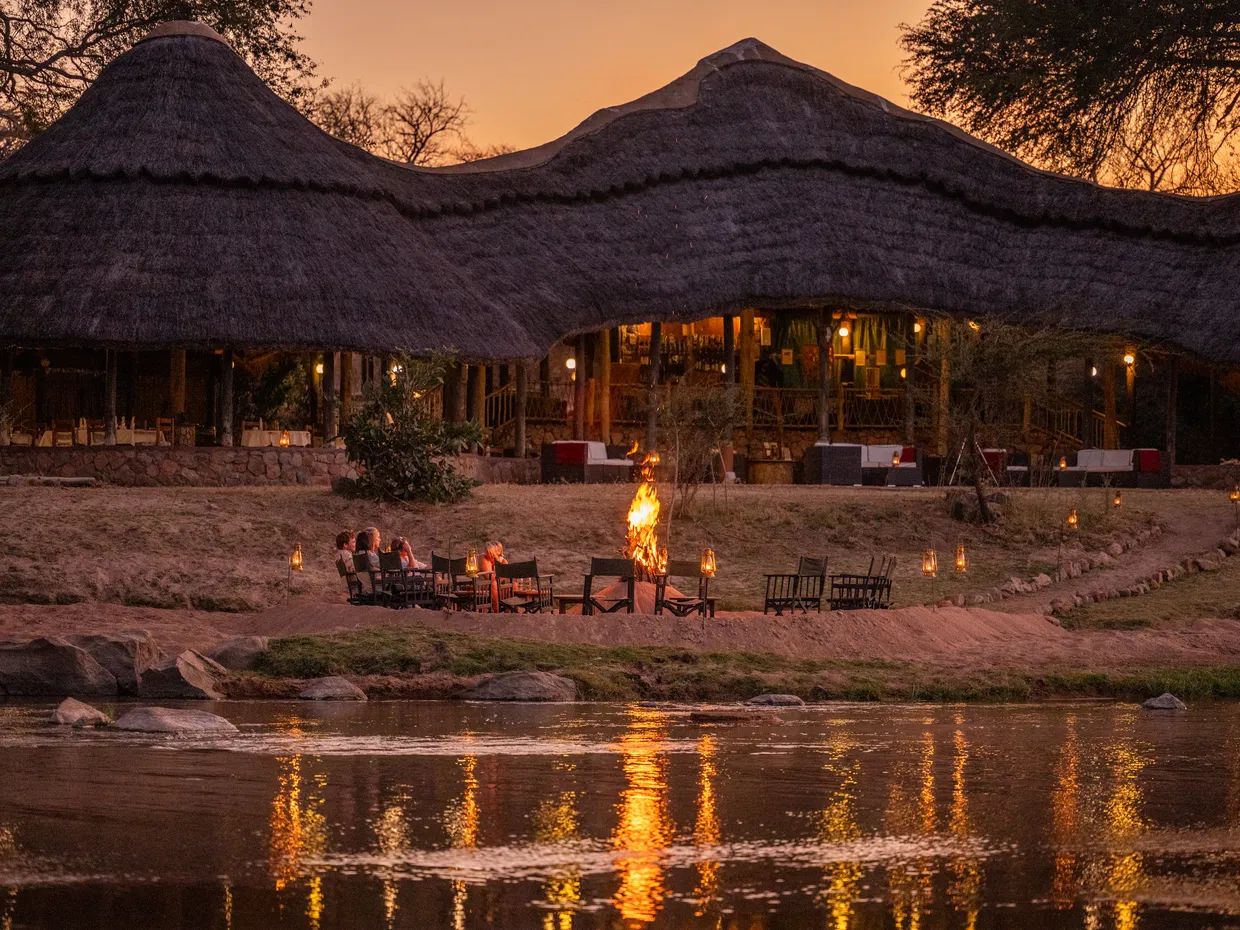
Ruaha National Park: Exceptional Predators Without the Crowds
A Ruaha safari offers one of Tanzania’s most compelling combinations of predators, elephants, dramatic landscapes and relatively low-density wildlife viewing.
Located in southern Tanzania, Ruaha National Park is a destination for travellers who want to experience a wilder and less crowded side of the country.
The park is vast.
Its landscape is striking.
Its wildlife is diverse.
And its predator viewing can be particularly rewarding.
Unlike some of the better-known northern safari destinations, Ruaha generally receives fewer visitors, creating a more private atmosphere on game drives.
For travellers considering a Ruaha safari, the appeal is not simply about avoiding crowds.
It is about experiencing an ecosystem with its own character.
Baobabs rise from dry landscapes.
The Great Ruaha River cuts through the park.
Elephants move across open country and woodland.
Lions patrol large territories.
African wild dogs can be encountered.
And every game drive can feel like an exploration rather than a checklist.
Ruaha Safari: Why Is Ruaha So Special?
A Ruaha safari stands out for its huge wilderness, strong predator populations, elephants and distinctive dry-country scenery.
Ruaha sits within the broader southern Tanzania safari circuit.
The experience is different from the classic northern route.
Instead of travelling between heavily visited wildlife destinations, you can spend several days exploring a vast ecosystem with fewer vehicles.
The landscape includes:
- Open plains.
- Miombo woodland.
- Acacia woodland.
- Rocky hills.
- River systems.
- Seasonal watercourses.
- Baobab-dotted scenery.
This habitat diversity supports a wide range of wildlife.
Ruaha National Park: A Vast Southern Wilderness
Ruaha National Park is enormous, giving travellers a genuine sense of space and wilderness during a safari.
Its scale is one of the park’s greatest attractions.
You can drive for long stretches without encountering another safari vehicle.
That does not mean you will always have a private sighting.
Popular wildlife areas can still attract vehicles.
But overall, the atmosphere can feel significantly quieter than some northern safari destinations.
For travellers who value solitude, this is a major advantage.
Ruaha Safari: Predators Are a Major Attraction
A Ruaha safari is particularly attractive to predator enthusiasts because the ecosystem supports lions, leopards, cheetahs, hyenas and African wild dogs.
The combination of predators and large herbivore populations creates a fascinating ecosystem.
Potential sightings include:
- Lions.
- Leopards.
- Cheetahs.
- African wild dogs.
- Spotted hyenas.
- Jackals.
- Crocodiles.
Predator sightings are never guaranteed.
However, Ruaha’s ecological conditions make predator viewing one of its major strengths.
Ruaha Predators: Why the Viewing Can Be Exceptional
Ruaha predators benefit from an ecosystem containing substantial prey populations, varied habitats and enormous territories where natural hunting behaviour can unfold.
The park supports large herbivores such as:
- Greater kudu.
- Impala.
- Zebra.
- Giraffe.
- Buffalo.
- Elephants.
- Waterbuck.
Predators respond to prey distribution.
This creates opportunities to observe:
- Hunting.
- Territorial behaviour.
- Feeding.
- Cubs.
- Pack interactions.
- Predator competition.
A patient guide can help interpret what is happening rather than simply identifying the species.
Ruaha Predators: Lions
Lions are among Ruaha’s most important predators and can provide memorable sightings across the park’s varied habitats.
Lions may be found:
- Near river systems.
- In woodland.
- Around open plains.
- Near concentrations of prey.
Their behaviour changes throughout the day.
Early morning can be productive for active animals.
During the heat of the day, lions may rest under shade.
Late afternoon can bring renewed activity.
A full-day game drive provides more opportunities to observe these patterns.
Ruaha Predators: African Wild Dogs
African wild dogs are one of Ruaha’s most exciting wildlife possibilities, making the park particularly attractive to travellers interested in rare and highly social predators.
Wild dogs are constantly on the move.
A pack may cover considerable distances.
If you encounter one, you might observe:
- Pack communication.
- Social grooming.
- Hunting preparation.
- Pups.
- Resting.
- Rapid movement across open ground.
Sightings remain unpredictable.
Their mobility is part of what makes finding them so rewarding.
Ruaha Predators: Leopards
Leopards are another prized Ruaha sighting, particularly around areas offering cover, trees and access to prey.
Leopards are solitary and elusive.
Look carefully around:
- Large trees.
- Riverine vegetation.
- Rocky areas.
- Woodland edges.
A leopard can be present without immediately being obvious.
Experienced guides often recognise subtle clues such as tracks, alarm calls and unusual animal behaviour.
Ruaha Predators: Cheetahs
Cheetahs can be encountered in Ruaha’s more open habitats, where their hunting style depends on visibility and suitable prey.
Unlike lions, cheetahs generally favour open areas where they can use speed.
A sighting can be particularly rewarding when the animal is actively scanning the plains.
Cheetahs are not guaranteed on every safari.
But their presence adds another dimension to Ruaha’s predator diversity.
Ruaha National Park: Elephants
Elephants are one of Ruaha’s defining animals and can form a major part of the safari experience.
Large elephant groups can move between feeding areas and water sources.
The park’s dry landscape makes water particularly important during certain periods.
You may see elephants:
- Crossing roads.
- Feeding in woodland.
- Drinking.
- Moving through open areas.
- Gathering around water.
Their interaction with the landscape is one of Ruaha’s most impressive sights.
Ruaha National Park: Greater Kudu
Greater kudu is one of Ruaha’s special wildlife attractions, with the park offering suitable woodland habitat for this striking antelope.
The species is recognised by:
- Large spiral horns in males.
- Vertical body stripes.
- Large ears.
- Shy behaviour.
They can be difficult to spot.
A quiet approach and careful scanning can make the difference.
For wildlife enthusiasts, finding a greater kudu can be one of the highlights of a Ruaha safari.
Ruaha National Park: The Great Ruaha River
The Great Ruaha River is central to the park’s ecology and provides an important source of water for wildlife, particularly during drier periods.
The river landscape attracts:
- Elephants.
- Hippos.
- Crocodiles.
- Antelope.
- Birds.
- Predators.
Water also creates natural gathering points.
As conditions become drier, wildlife may become increasingly dependent on reliable water sources.
This can make river areas productive for game viewing.
Ruaha National Park: Baobab Landscapes
Ruaha’s giant baobabs create one of the most distinctive landscapes in Tanzania and add a dramatic visual character to the safari.
The trees can appear across open areas and rocky landscapes.
Combined with:
- Red soil.
- Golden grass.
- Rocky hills.
- Woodland.
- Elephants.
They create excellent photographic scenes.
Ruaha is therefore as much a landscape destination as it is a wildlife destination.
Ruaha Safari: What Is the Best Time to Visit?
The best time for a Ruaha safari depends on whether your priority is concentrated wildlife viewing, green-season scenery, birding or quieter travel.
Broadly, travellers can consider:
Dry Season
Wildlife can become easier to locate around remaining water sources.
Green Season
The landscape becomes lush and bird activity increases.
Transitional Periods
These can combine changing scenery with variable wildlife conditions.
Your travel priorities should determine the best month.
Ruaha Safari: Dry Season
The dry season is often favoured for wildlife viewing because animals may become more concentrated around reliable water sources.
The landscape can become:
- Dry.
- Golden.
- Dusty.
- Clear.
- Highly photogenic.
Predators may be easier to locate in some areas because prey becomes more concentrated.
However, dry conditions can also produce intense heat during the middle of the day.
Ruaha Safari: Green Season
The green season transforms Ruaha into a lush landscape and can be particularly attractive to photographers and birdwatchers.
After rainfall, you may see:
- Green grass.
- Fresh foliage.
- Dramatic clouds.
- Migratory birds.
- Young animals.
- Colourful landscapes.
The trade-off is that thick vegetation can sometimes make wildlife more difficult to spot.
Ruaha Safari: How Many Nights Do You Need?
Three to four nights is a strong starting point for a Ruaha safari, while longer stays provide more time to explore different habitats and search for predators.
A sample itinerary could include:
Day 1
Arrival and afternoon game drive.
Day 2
Full-day game drive.
Day 3
Morning game drive and afternoon wildlife exploration.
Day 4
Morning game drive and departure.
For serious wildlife enthusiasts, four or five nights can provide a more immersive experience.
Ruaha Safari: Full-Day Game Drives
Full-day game drives are particularly useful in Ruaha because the park is vast and wildlife can be spread across different habitats.
A full day gives your guide more flexibility.
You can:
- Travel farther.
- Follow wildlife activity.
- Spend longer with predators.
- Explore different habitats.
- Stop for a picnic.
- Search for wild dogs.
- Follow tracks.
This is especially valuable for travellers who want more than quick sightings near camp.
Ruaha Safari: Why Fewer Vehicles Matter
One of the major advantages of a Ruaha safari is the relatively low density of visitors compared with Tanzania’s busiest northern destinations.
Fewer vehicles can mean:
- More peaceful sightings.
- Less congestion.
- A stronger wilderness feeling.
- More flexibility at some sightings.
- Greater appreciation of the landscape.
It is important not to interpret this as complete isolation.
Other vehicles are still present.
Popular sightings can attract multiple vehicles.
But the overall experience can remain considerably less crowded.
Southern Tanzania Parks: Why Explore the Region?
Southern Tanzania parks offer travellers an alternative to the country’s famous northern safari circuit, combining wilderness, diverse habitats and a generally quieter atmosphere.
The southern circuit can include:
- Ruaha.
- Nyerere.
- Mikumi.
- Udzungwa.
Each destination provides something different.
Ruaha is particularly strong for:
- Predators.
- Elephants.
- Baobabs.
- Dry-country landscapes.
Nyerere is known for:
- Boat safaris.
- Rufiji River.
- Walking.
- Wetland habitats.
This makes combining destinations particularly attractive.
Southern Tanzania Parks: Ruaha and Nyerere
Combining Ruaha with Nyerere creates one of the strongest southern Tanzania itineraries because the two parks provide distinctly different safari experiences.
A journey might include:
Nyerere → Ruaha
At Nyerere, experience:
- Boat safaris.
- Walking.
- Rufiji River wildlife.
At Ruaha, focus on:
- Predators.
- Elephants.
- Baobabs.
- Open-country wildlife.
The combination creates variety without requiring a northern Tanzania route.
Southern Tanzania Parks: Ruaha and Mikumi
Ruaha and Mikumi can work well together for travellers building a broader southern circuit itinerary from Dar es Salaam.
Mikumi can provide a more accessible introduction to southern Tanzania.
Ruaha then offers a deeper wilderness experience.
This combination is particularly useful for travellers with several days available.
Ruaha Safari: How to Get There
Ruaha can be reached by road or air, with the best option depending on your starting point and whether you are combining it with other southern Tanzania parks.
Travellers may connect from:
- Dar es Salaam.
- Nyerere.
- Mikumi.
- Arusha.
- Zanzibar.
Internal flights can save significant time.
Road transfers can make sense for multi-park itineraries.
Your operator can determine the most efficient routing.
Ruaha National Park: Accommodation
Ruaha offers a range of safari camps and lodges, from comfortable tented properties to more exclusive luxury experiences.
When choosing accommodation, consider:
- Location.
- Game-drive access.
- Camp size.
- Room style.
- Meal arrangements.
- Private vehicle availability.
- Seasonal operation.
- Walking opportunities.
- Transfer logistics.
The cheapest room is not always the best value.
A property with better positioning can improve your overall safari experience.
Ruaha Safari: Luxury Experiences
Luxury Ruaha safaris combine private accommodation, experienced guides, excellent food and access to a vast wilderness with relatively low visitor density.
Luxury can include:
- Private tents.
- Outdoor dining.
- Private vehicles.
- Personal guides.
- Walking experiences.
- Sundowners.
- Bush breakfasts.
- Tailor-made itineraries.
However, the destination’s real luxury is often the sense of space.
Ruaha Safari: Walking Experiences
Walking can add an entirely different dimension to a Ruaha safari by shifting attention from large mammals to tracks, plants, birds and the details of the ecosystem.
Walking can reveal:
- Animal spoor.
- Tracks.
- Dung.
- Plants.
- Insects.
- Birds.
- Smaller mammals.
It requires a different mindset.
You are not travelling quickly between sightings.
You are learning to read the environment.
Activities depend on park regulations, guide qualifications and camp arrangements.
Ruaha Safari: Photography
Ruaha provides exceptional photography opportunities through its predators, elephants, baobabs, open landscapes and changing seasonal light.
Photographers can focus on:
- Lions.
- Wild dogs.
- Leopards.
- Elephants.
- Greater kudu.
- Giraffes.
- Baobabs.
- River landscapes.
- Golden grasslands.
Early mornings and late afternoons usually provide the most attractive light.
A telephoto lens is useful for wildlife.
A wider lens helps capture the scale of the landscape.
Ruaha Safari: Birdwatching
Birdwatching adds another layer to a Ruaha safari, particularly during greener periods when seasonal bird activity can increase.
The varied habitats support many species.
You may encounter:
- Raptors.
- Hornbills.
- Bee-eaters.
- Kingfishers.
- Rollers.
- Storks.
- Egrets.
- Eagles.
Travellers interested in birds should tell their guide in advance.
A bird-focused safari requires a different pace.
Ruaha Safari: Family Travel
Families can enjoy Ruaha, although the park’s remoteness and long game drives make itinerary planning especially important.
Consider:
- Private vehicles.
- Family-friendly camps.
- Suitable room configurations.
- Child policies.
- Drive durations.
- Activity age restrictions.
Younger children may require shorter activities.
Older children often appreciate the tracking and predator focus.
Ruaha Safari: Honeymoon Travel
Ruaha can be a remarkable honeymoon destination for couples who want privacy, wilderness and a safari experience away from the busiest tourist routes.
A honeymoon itinerary could combine:
Ruaha → Nyerere → Zanzibar
This provides:
- Predator viewing.
- Elephant encounters.
- River experiences.
- Luxury camps.
- Beach relaxation.
Private accommodation and vehicles can create a more intimate experience.
Ruaha Safari: Who Should Go?
A Ruaha safari is particularly suited to travellers who value wilderness, predators, elephants, landscapes and a quieter safari atmosphere.
Ruaha is ideal for:
- Repeat safari travellers.
- Wildlife enthusiasts.
- Photographers.
- Couples.
- Honeymooners.
- Birdwatchers.
- Adventure travellers.
- Travellers seeking fewer vehicles.
It may be less suitable for someone with only a few days who wants to visit several iconic northern destinations.
Ruaha Safari: Who Might Prefer the Northern Circuit?
Travellers whose priority is the Great Migration, Ngorongoro Crater or the classic northern Tanzania safari may find the northern circuit more appropriate.
Choose the northern route if you specifically want:
- Serengeti migration.
- Ngorongoro Crater.
- Tarangire.
- Mount Kilimanjaro combinations.
Choose Ruaha if your priorities are:
- Predators.
- Elephants.
- Wild dogs.
- Wilderness.
- Baobabs.
- Lower vehicle density.
There is no universally better safari.
The right destination depends on the experience you want.
Ruaha Safari: Common Planning Mistakes
The biggest mistake is treating Ruaha as a quick stop rather than a destination deserving several days of exploration.
Avoid:
Staying only one night
The park is too large for a rushed visit.
Expecting guaranteed predator sightings
Wildlife is unpredictable.
Comparing Ruaha only by Big Five checklists
The landscape and atmosphere are major attractions.
Ignoring the season
Weather affects roads, vegetation and wildlife distribution.
Choosing accommodation without considering location
Drive times matter.
Overloading the itinerary
Allow enough time to experience the park properly.
Ruaha Safari: Frequently Asked Questions
Is Ruaha National Park worth visiting?
Yes. It is particularly attractive for travellers seeking predators, elephants, wild dogs, baobabs and a quieter safari environment.
What is Ruaha famous for?
Ruaha is known for its large wilderness, elephants, predators, African wild dogs, greater kudu, baobabs and the Great Ruaha River.
Is Ruaha good for predators?
Yes. Predator viewing is one of the park’s major attractions, with opportunities for lions, leopards, cheetahs, hyenas and wild dogs.
Can I see African wild dogs in Ruaha?
Yes, wild dogs occur in the ecosystem, but sightings cannot be guaranteed because packs are highly mobile.
Is Ruaha crowded?
Ruaha generally has fewer visitors than Tanzania’s busiest northern safari destinations, although popular wildlife sightings can still attract vehicles.
What is the best time for a Ruaha safari?
Dry periods are often favoured for wildlife viewing, while greener periods can be excellent for scenery and birdwatching.
How many days should I spend in Ruaha?
Three to four nights is a good starting point. Wildlife enthusiasts may prefer four or five nights.
Can Ruaha be combined with Nyerere?
Yes. Ruaha and Nyerere make an excellent southern Tanzania combination because they offer contrasting landscapes and activities.
Is Ruaha good for a honeymoon?
Yes. Its remote setting, intimate camps and lower visitor density can create an excellent honeymoon experience.
Is Ruaha better than Serengeti?
Neither is universally better. Serengeti is stronger for the Great Migration, while Ruaha is particularly attractive for predators, elephants and a quieter wilderness experience.
Conclusion: Why Ruaha Is an Exceptional Safari Choice
A Ruaha safari offers a compelling alternative to Tanzania’s better-known northern circuit, combining exceptional predator viewing, elephants, wild dogs, baobabs and vast wilderness with fewer vehicles.
The park rewards travellers who are willing to go farther.
It is not simply about ticking off wildlife species.
It is about watching lions move through dry grassland.
Following elephant herds near the Great Ruaha River.
Searching for African wild dogs.
Spotting a greater kudu in woodland.
Photographing enormous baobabs against an African sunset.
And spending hours in a wilderness where the next vehicle may be nowhere in sight.
For travellers looking beyond the standard safari route, Ruaha predators and the broader southern Tanzania experience make this destination exceptionally worthwhile.
If you want a safari that feels spacious, wild and less predictable, Ruaha deserves a place on your itinerary.
Plan Your Ruaha Safari With Odysseys From Africa
Odysseys From Africa can design a tailor-made Ruaha safari around your travel dates, wildlife interests, accommodation preferences and budget.
We can arrange:
- Ruaha National Park safaris.
- Predator-focused safaris.
- African wild dog safaris.
- Southern Tanzania parks itineraries.
- Nyerere and Ruaha combinations.
- Mikumi and Ruaha itineraries.
- Private safari vehicles.
- Walking experiences.
- Luxury safari camps.
- Photography safaris.
- Family safaris.
- Honeymoon safaris.
- Zanzibar extensions.
- Kenya and Tanzania combined safaris.